
Case study 01 · Email marketing
Generated $17.9K+ in Email Revenue in 3 Weeks
A beauty retailer had 35,000+ people on its email list and almost no revenue coming from it. Three weeks later, that list had brought in $17.9K.
- Industry
- Beauty & Skincare / E-commerce
- Focus
- Email Marketing & Retention
- Engagement
- Three weeks
The numbers tell the story
More value from the list
The opportunity wasn’t to find more customers. It was to make better use of the subscribers the brand already had.
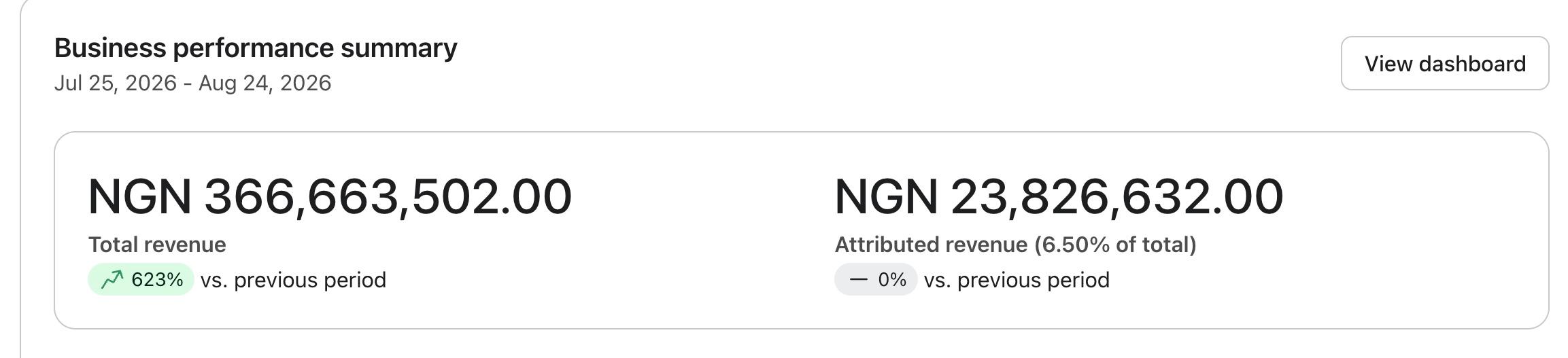
- $17.9K+
- (₦23.8M+) email revenue generated in three weeks
- $2.66K
- (₦3.54M) generated in the first 24 hours
- 43%
- Increase in returning customer revenue
- 20.5%
- Average email open rate
- 80.7%
- Open rate on the best-performing email
- 15.73%
- Email conversion rate
01 / The challenge
An established subscriber database. An underused marketing channel.
The brand already had something many e-commerce businesses spend heavily to build: more than 35,000 subscribers.Email had never been developed as a revenue channel, despite the size of that audience.
The brand also communicated with every subscriber in the same way. A wholesaler buying in bulk, a regular skincare customer and someone looking for a hyperpigmentation solution were all receiving the same message.
The challenge was to build an email approach that recognised these differences, delivered more relevant communication and created new revenue.
The question wasn’t how many emails the brand could send. It was how much value it could unlock from the subscribers it already had.
02 / My strategy & execution
A more relevant customer journey, built to drive purchasing.
I approached the opportunity from three angles: understanding the sales and subscriber database, building a more relevant customer journey and developing campaigns that encouraged purchasing.
- 01
Turned customer data into actionable segments
Before writing any campaigns, I needed to know who was actually in the database. I analysed customer and purchase data to find patterns and opportunities for targeted communication.
I created 20 user segments. This moved the strategy away from treating the database as a single audience. Each segment received communication matched to its interests, purchasing behaviour and relationship with the brand.
- 02
Built a structured email marketing system
With a clearer picture of the audience, I built a more organised email infrastructure. The aim was a system that could support both immediate revenue and longer-term customer relationships.
- Developed a customer journey and email communication plan
- Mapped email frequency to keep communication consistent
- Built multiple sequences and flows
- Implemented automated segmentation in Klaviyo using Zapier
- Developed owner-led emails to create a more personal connection with subscribers
- 03
Developed campaigns around customer behaviour
Infrastructure alone wasn’t enough. The emails needed to give subscribers a reason to engage and buy. I wrote email copy and campaign messaging built around behavioural psychology, customer motivations and purchasing triggers.
Instead of relying on promotional announcements, campaigns communicated product value, addressed customer needs and made buying decisions easier. The owner-led emails gave the brand a more personal voice.
The goal was for email to feel less like another promotional channel and more like a useful extension of the customer experience.
03 / The business impact
The commercial opportunity was already in the audience.
₦3,541,091 in the first 24 hours. The first day showed how quickly a well-executed email campaign can contribute to revenue.
$17.9K (over ₦23,826,632) in three weeks. The email marketing engagement generated more than ₦23.8 million in reported revenue.
The impact went beyond immediate sales. The wider customer engagement initiative also supported stronger customer relationships, with more than 150 new Google reviews recorded.
The project showed the potential of email as both a revenue and a retention channel.
04 / What this project demonstrates
Growth can start with the customers you already have.
Businesses don’t always need to acquire more customers to generate more revenue. Sometimes the opportunity is already sitting in their subscriber database.
A list of 35,000+ subscribers is significant potential, but its size means little if communication isn’t relevant, consistent and strategic. The real opportunity comes from understanding who those subscribers are, what they need, how they buy and what kind of message moves them towards a purchase.
That’s how I approach growth marketing. I don’t start by asking which channel a business should invest in. I start by identifying where the biggest opportunity is and what needs to happen to unlock it.
Your next opportunity
Could Your Existing Subscribers Be Generating More Revenue?
You may already have thousands of subscribers, past customers and people who have shown interest in your products. The question is whether your current strategy is making the most of them. Let’s identify the opportunities your business could be missing.